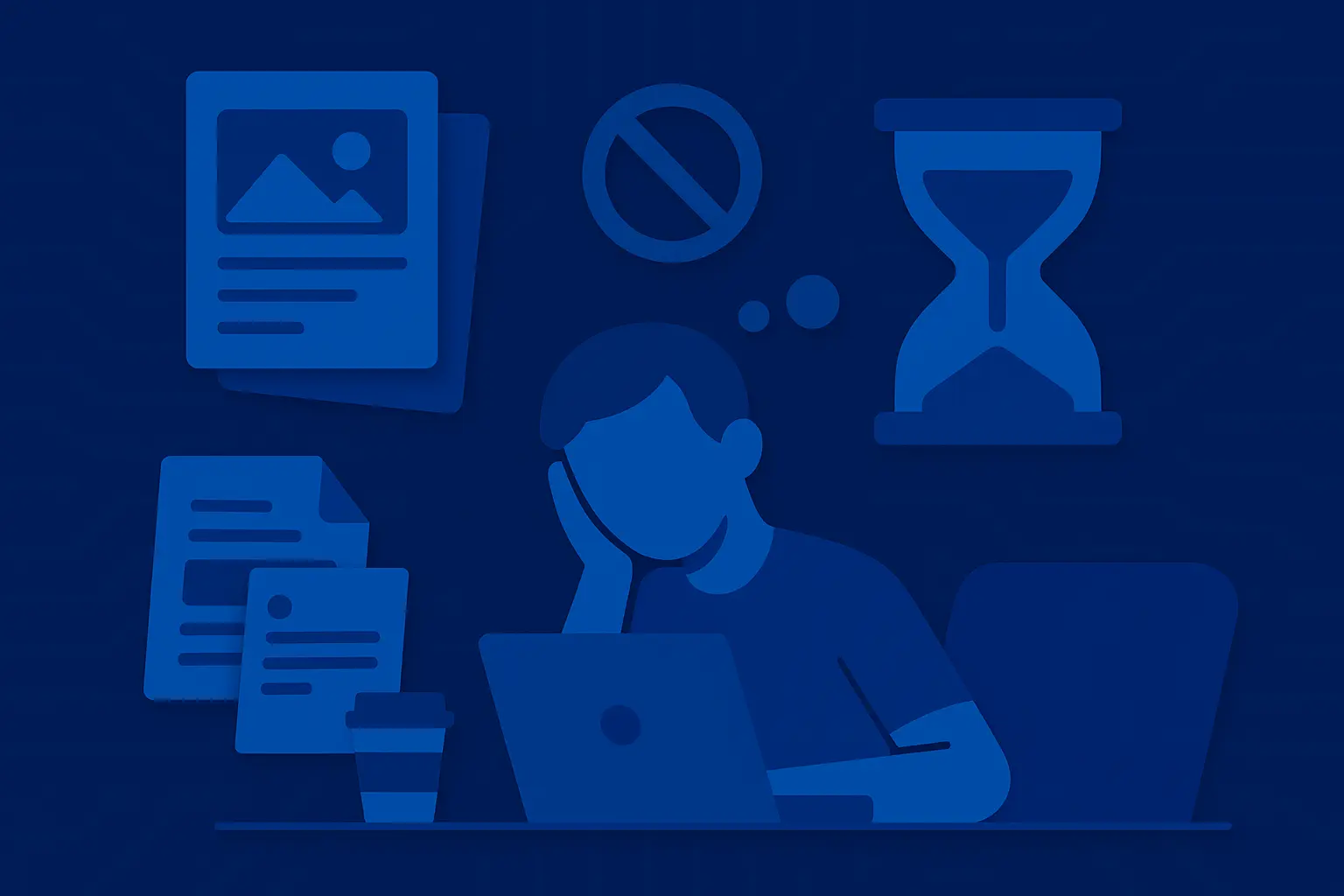
There is a silent attrition happening inside large organisations. Not of customers, not of products, but of content teams. You won’t see it in turnover reports immediately. You won’t hear it announced at board meetings. But behind the scenes, talented writers, strategists, and digital marketers are quietly losing momentum, losing morale, and in too many cases, walking away from roles they once enjoyed.
At Quantum Pixel, we have worked across enough enterprise environments to know the cause is rarely the work itself. The problem is the environment. Specifically, the broken, slow, outdated, overly bureaucratic digital infrastructure that strangles creativity, inflates menial tasks, and reduces smart marketers to glorified ticket managers.
If you’ve ever wondered why your content velocity drops after a website relaunch, why your team seems slower despite more headcount, or why new hires stop producing after three months, it’s not a mystery. It’s your digital processes suffocating them.
How Enterprise Website Infrastructure Crushes Creative Output
In theory, content teams should be the engine of brand growth. They fuel thought leadership, SEO dominance, product education, lead nurturing, and customer retention. But in practice, most enterprise teams spend more time navigating slow processes than creating.
It starts innocently enough. A simple blog post requires not just drafting but formatting inside a legacy CMS with poor UX. A minor product update means wrangling five different internal tools to adjust pages, update internal links, and log everything in compliance software. Scheduling a campaign involves coordinating across multiple departments, each with their own sign-off processes, followed by a multi-week development queue to push trivial page tweaks live.
The ratio of time spent on content creation versus operational admin skews rapidly. Creativity gets replaced by logistical juggling. Strategic thinking gives way to managing bottlenecks. Content marketing becomes content maintenance.
The Psychological Cost: Why Good People Switch Off
It’s not just an operational problem — it’s a motivational one. Creative professionals thrive on making things, shipping things, seeing impact. Slow, cumbersome digital setups undermine all three.
Nothing demotivates faster than seeing good ideas stall because of internal red tape. Watching timely campaigns miss their market window because “the dev queue is full until next month.” Spending more time formatting than writing. Knowing that no matter how good your work, a simple website update will require four approvals and two Jira tickets.
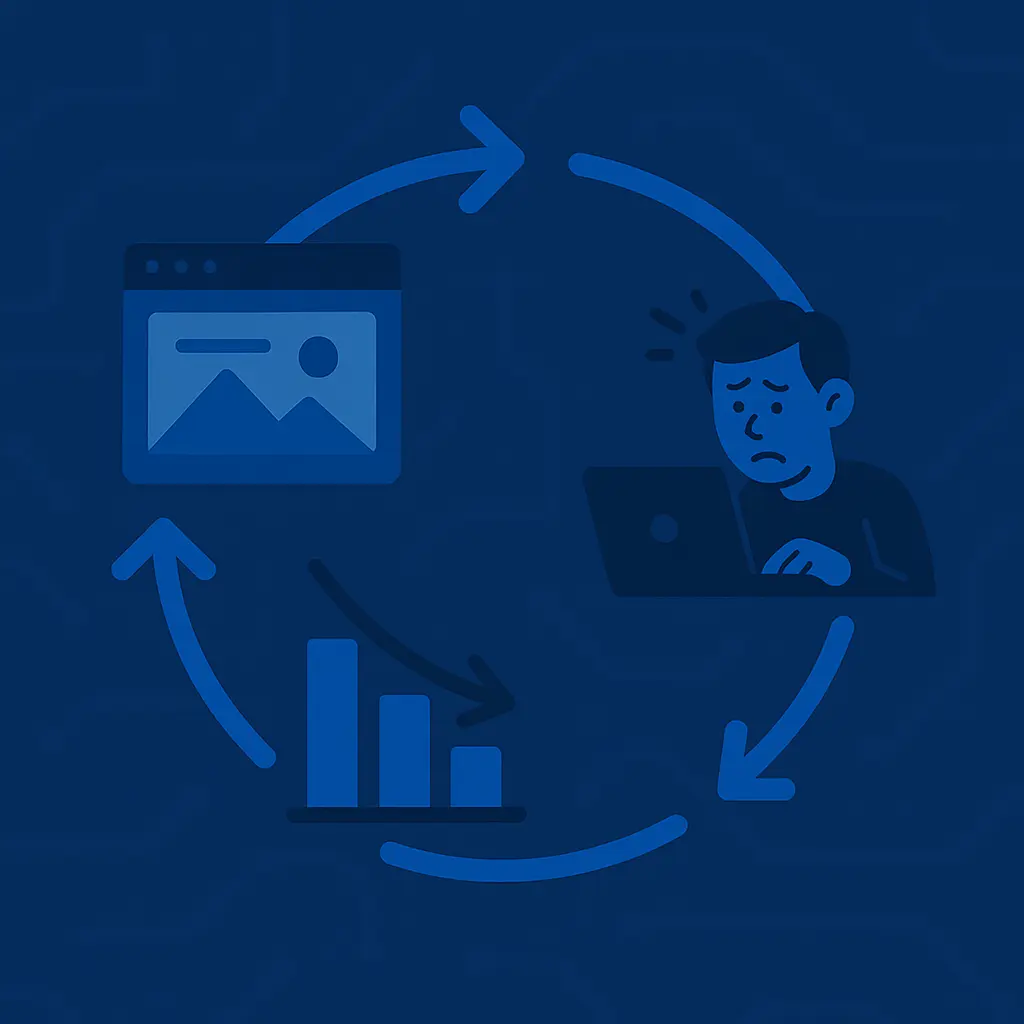
This erosion of impact creates a vicious cycle. Slower processes lead to slower output, which leads to lower perceived team value, which leads to reduced budgets, which leads to even worse tools and processes. Talented people leave. Those who stay learn to lower their expectations.
The Hidden Commercial Impact: Lost Speed, Lost Quality, Lost Revenue
Beyond team morale, this operational decay has a direct business cost. Campaigns take longer to ship, reducing responsiveness to market shifts. Search rankings decline because website updates lag behind content needs. Lead generation pipelines weaken because outdated messaging remains live for too long. Customer education suffers because documentation updates take weeks instead of hours.
What enterprises see as a “content production slowdown” is actually a systemic operational failure that leaks revenue across every stage of the funnel. Marketing costs go up to compensate for decaying organic performance. Sales cycles stretch as outdated materials confuse buyers. Brand perception dulls as competitors move faster and appear more relevant.
The Real Fix: Structural Freedom for Content Teams
This is not fixed by hiring more content marketers. It is fixed by giving them operational freedom. The highest-performing enterprises we work with all have one thing in common: their content teams can move fast without breaking things.
That means a modern CMS with clean, flexible content blocks that marketing controls. It means robust design systems that eliminate the need for dev team intervention on 90% of updates. It means a governance model that empowers non-technical teams to ship improvements daily — not monthly. And it means leadership that understands velocity drives revenue, and that operational agility is not optional in a competitive market.
Slow Processes Cost More Than Time — They Cost Talent
Enterprises that fail to fix their digital processes don’t just lose speed — they lose people. The brightest marketers will not waste their prime years fighting internal systems that make them feel ineffective. They will leave for environments where they can ship quickly, see impact, and grow their careers.
At Quantum Pixel, we believe operational design is a core driver of marketing success. Fast, empowered content teams generate more revenue, attract better talent, and sustain healthier brands. Slow, frustrated teams drag down every commercial metric — and by the time the business notices, the damage is already done.
If your content output is shrinking, don’t start by blaming your team. Start by auditing the system they’re trapped inside.